Overview
Julius Bär is one of the world’s leading private banking groups — 130 years old, headquartered in Zurich, managing over CHF 400 billion in assets. When their technology division set out to transform how internal teams worked, they needed more than a new tool or a redesigned interface. They needed a different way of thinking.
I was embedded as Senior Product Designer within TechX, Julius Bär’s internal innovation unit, to introduce design practice into a technology culture built on engineering rigour and financial precision.
CHF 400B
Assets under management
130+
Years of banking heritage
4
Core insight themes surfaced
The Challenge
Private banking runs on relationships, discretion, and precision — values baked into an institution over generations. But inside Julius Bär’s technology organisation, those same values had calcified into risk-averse, top-down delivery patterns that struggled to keep pace with the expectations of modern banking clients.
TechX existed to change that. A small, ambitious unit charged with accelerating innovation, it lacked the design practice needed to make that mission real. My role was to build that practice from the inside — not by imposing a process, but by working alongside engineers, product managers, and relationship managers to show what a human-centred approach could unlock.
Research: Understanding the Real Friction
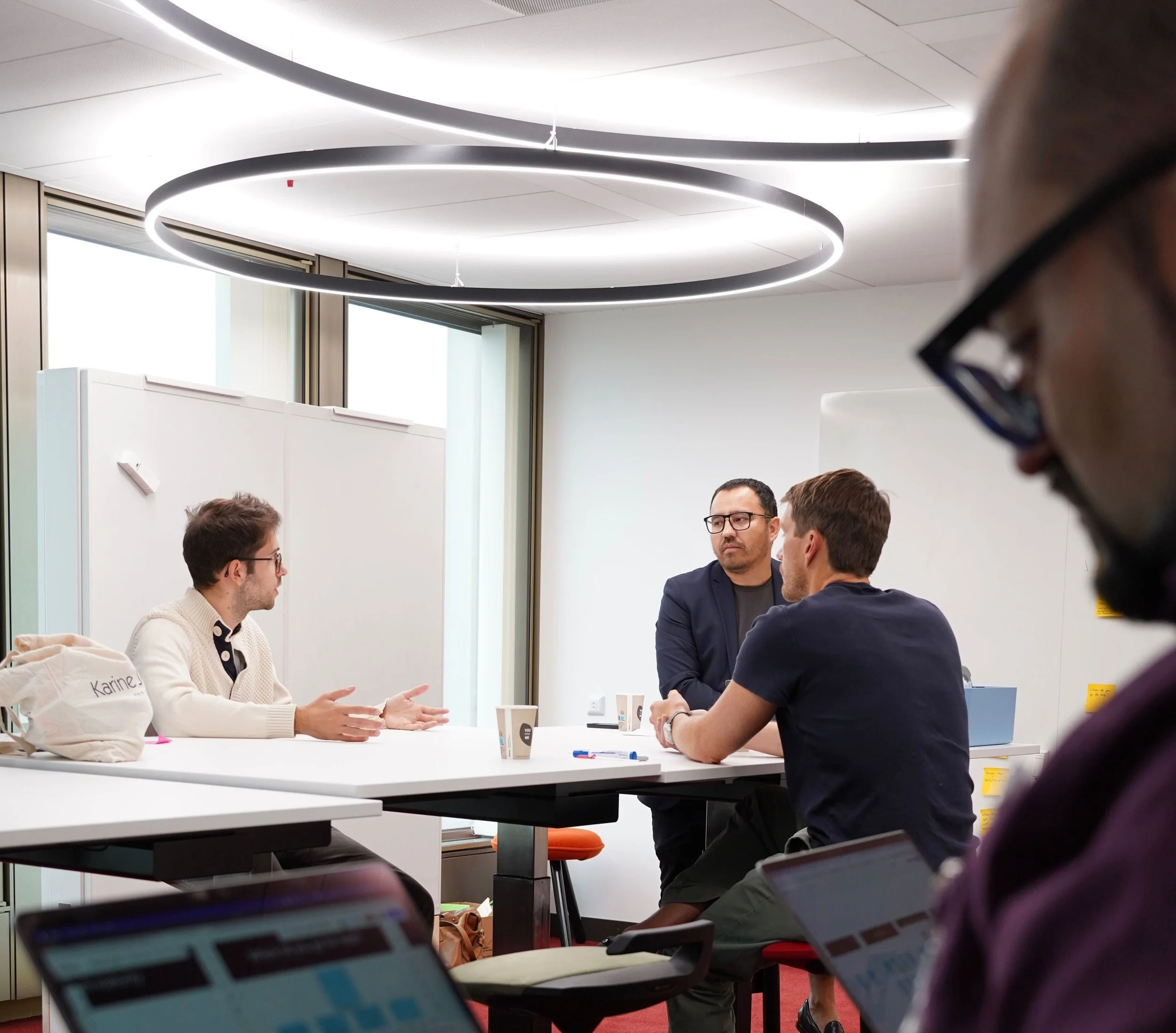
Before designing anything, I needed to understand how people inside the bank actually experienced the technology they used every day. I led a research programme with the Client Lifecycle Management (CLM) team — the people responsible for onboarding, compliance, and relationship management — to surface the friction that slowed them down and the workarounds they’d normalised.
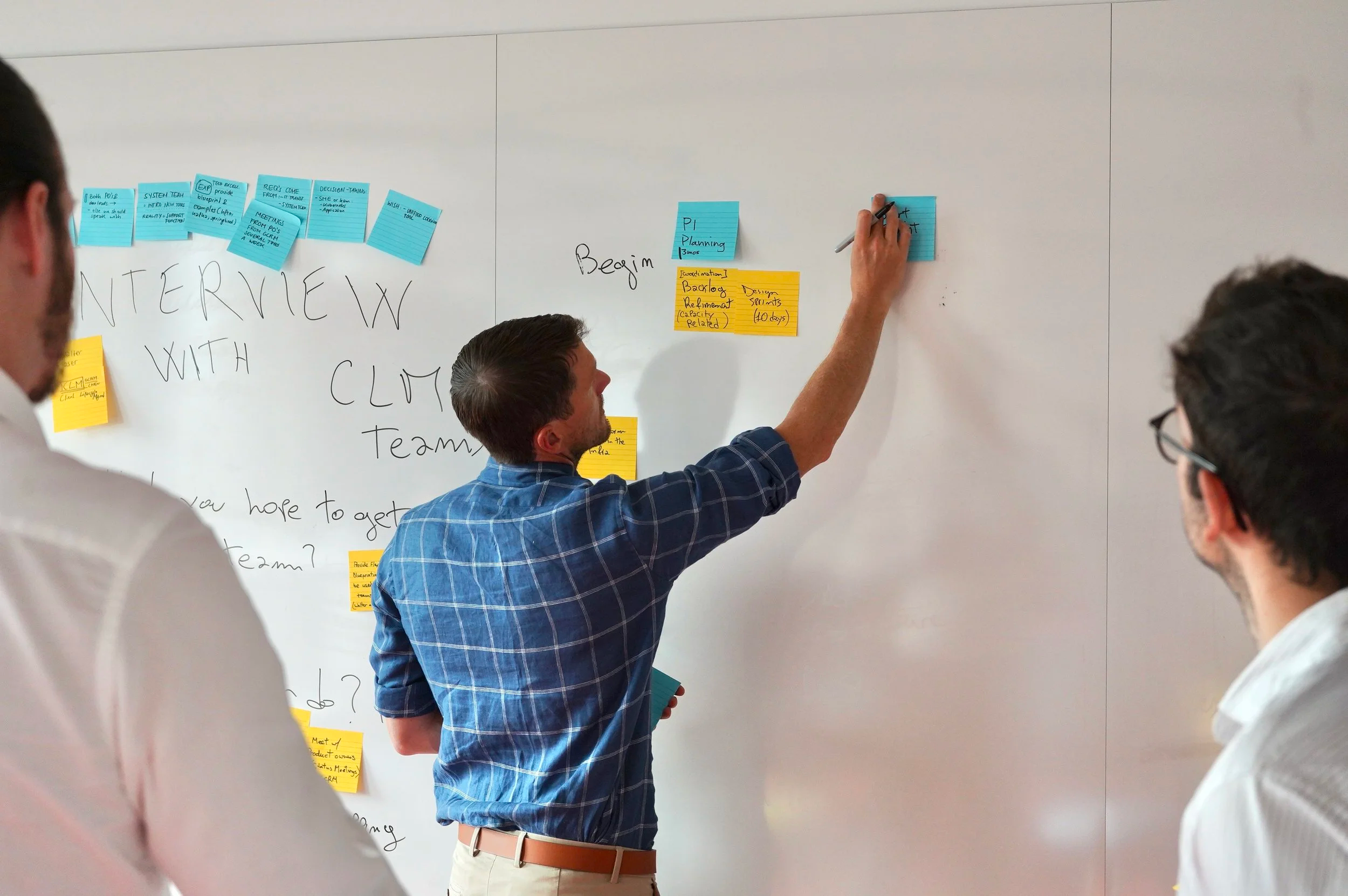
The interviews were structured around workflow observation as much as conversation. I wanted to see where people paused, reached for a workaround, or silently accepted something broken. Those moments are where the real design problems live.
Synthesis: What the Data Said
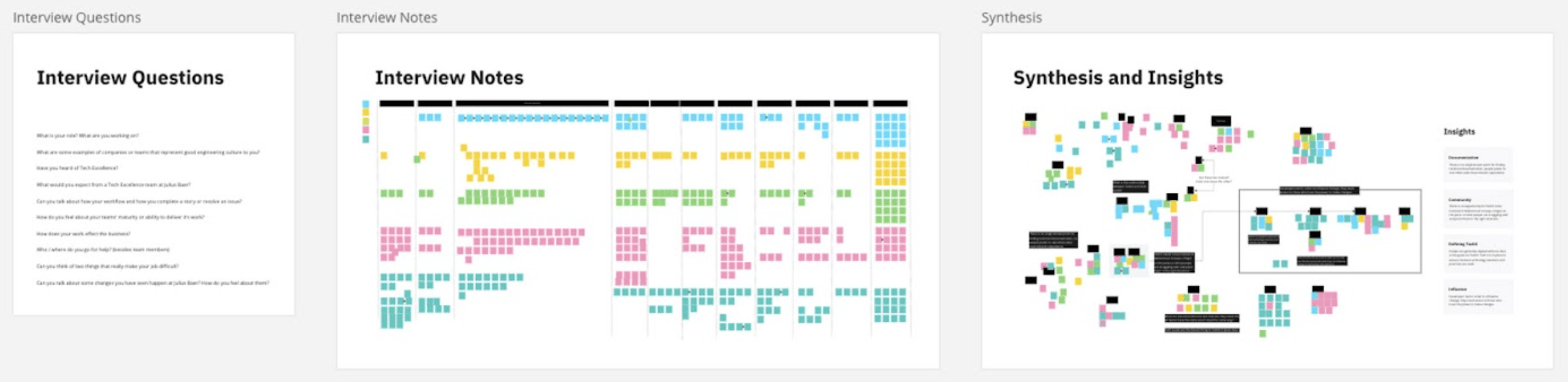
The synthesis work transformed raw interview data into an affinity map that organised every finding into clusters. Four themes emerged — not as abstract categories, but as concrete problem areas that the organisation had the power to change.
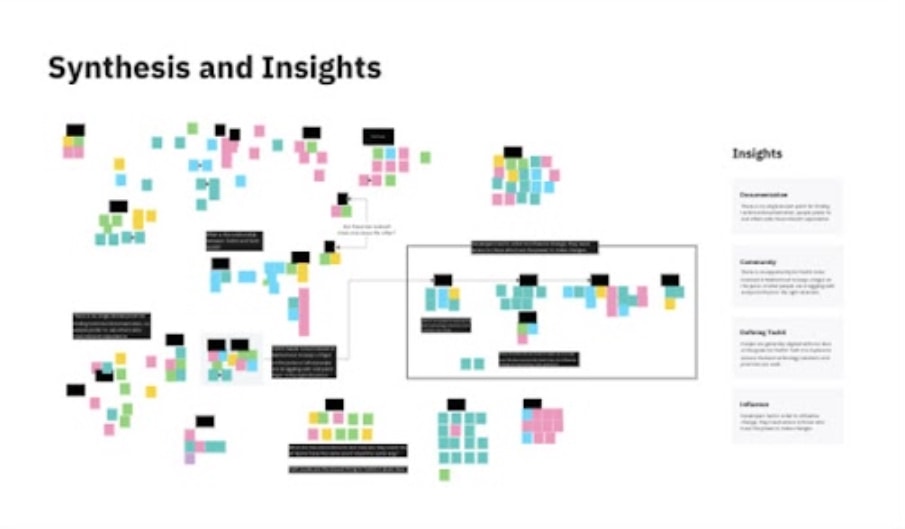
Documentation
Knowledge was trapped in email threads and individual expertise — not captured, not shared, not usable at scale.
Community
Silos between teams meant work was being duplicated and opportunities to collaborate were consistently missed.
Delivery Toolkit
Teams lacked a shared language and toolset for how work gets done — leading to inconsistent quality and delivery drift.
Influence
Good ideas struggled to gain traction. People closest to the problems had the least influence over decisions about solving them.
Building the TechX Identity
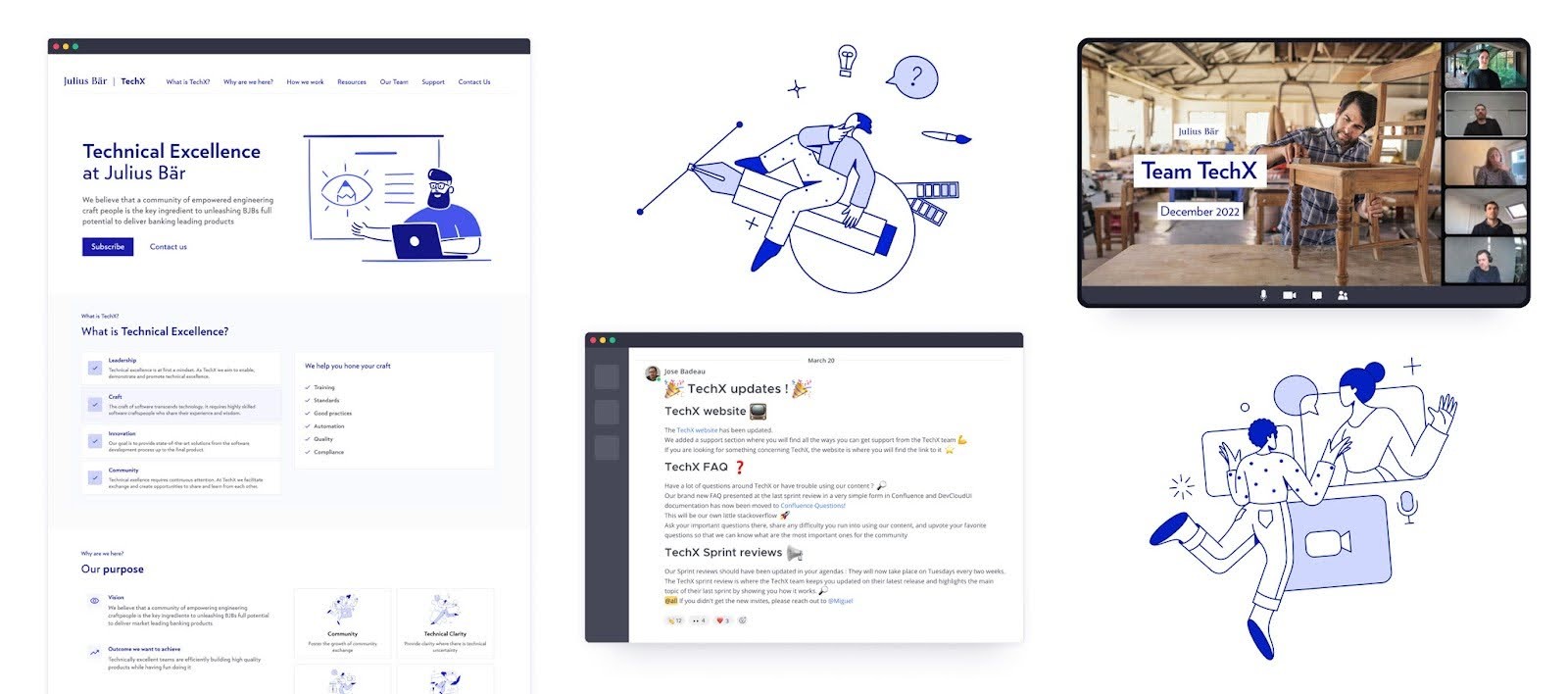
An innovation unit embedded within a 130-year-old institution needs to earn its credibility. TechX needed an identity that communicated something distinct from the bank at large — a signal that this team worked differently — without undermining the trust that the Julius Bär brand carried.
I designed the TechX brand and communication suite: a visual system, templates for team updates, and a set of illustrations that gave the unit a consistent, recognisable voice across digital and internal channels.
Embedding How We Work
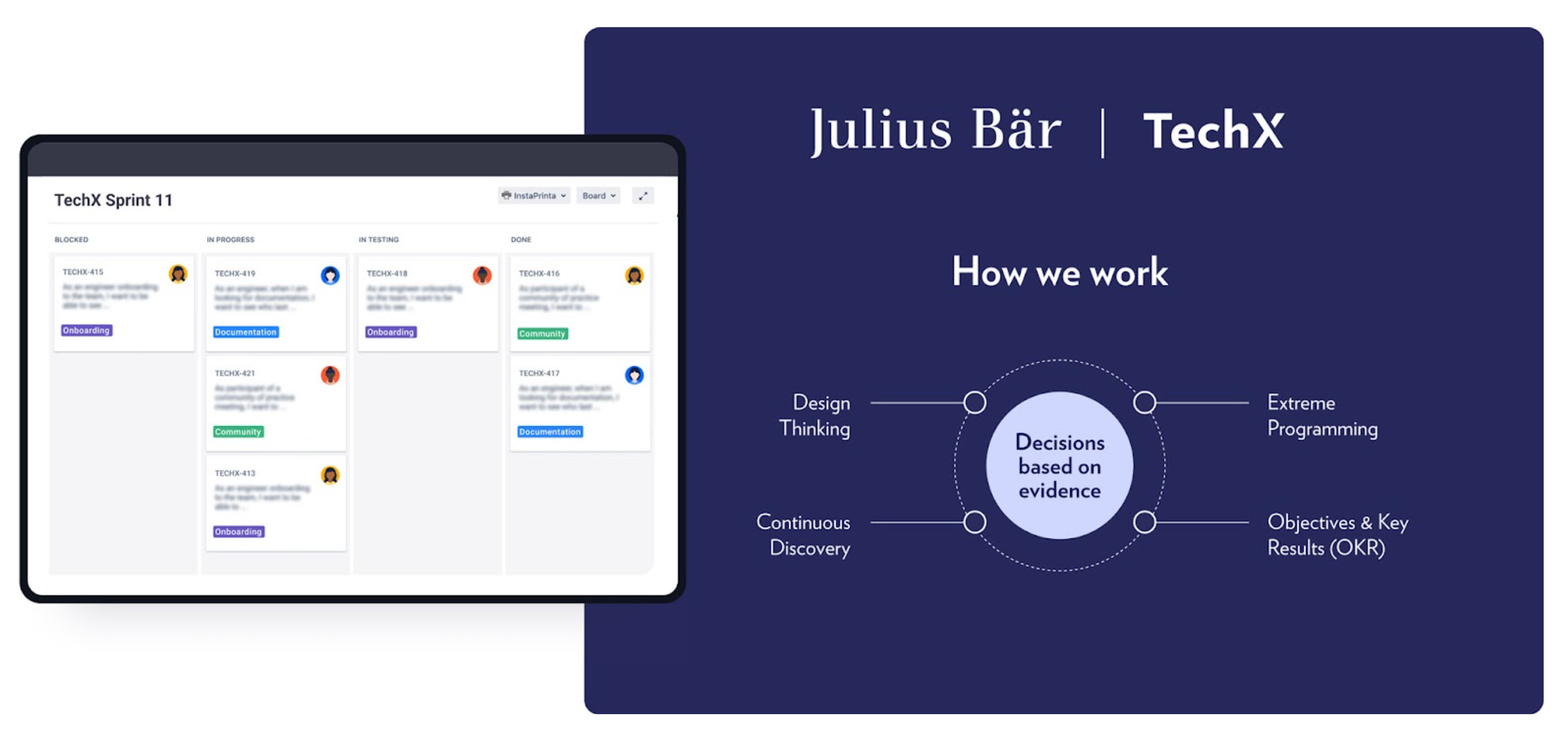
The harder design problem was process, not pixels. I worked with the TechX leadership to codify how the team delivered — creating a “How We Work” framework that combined Design Thinking, Continuous Discovery, Extreme Programming, and OKR-based goal-setting into a coherent methodology any team member could understand and apply.
“Decisions based on evidence.” That principle sat at the centre of everything — a direct response to a culture where seniority often outweighed insight.
The framework wasn’t a policy document. It was a living artefact, updated as the team learned, used in onboarding, and referenced in retros. The goal was to make good process feel natural rather than bureaucratic.
The People Behind the Work
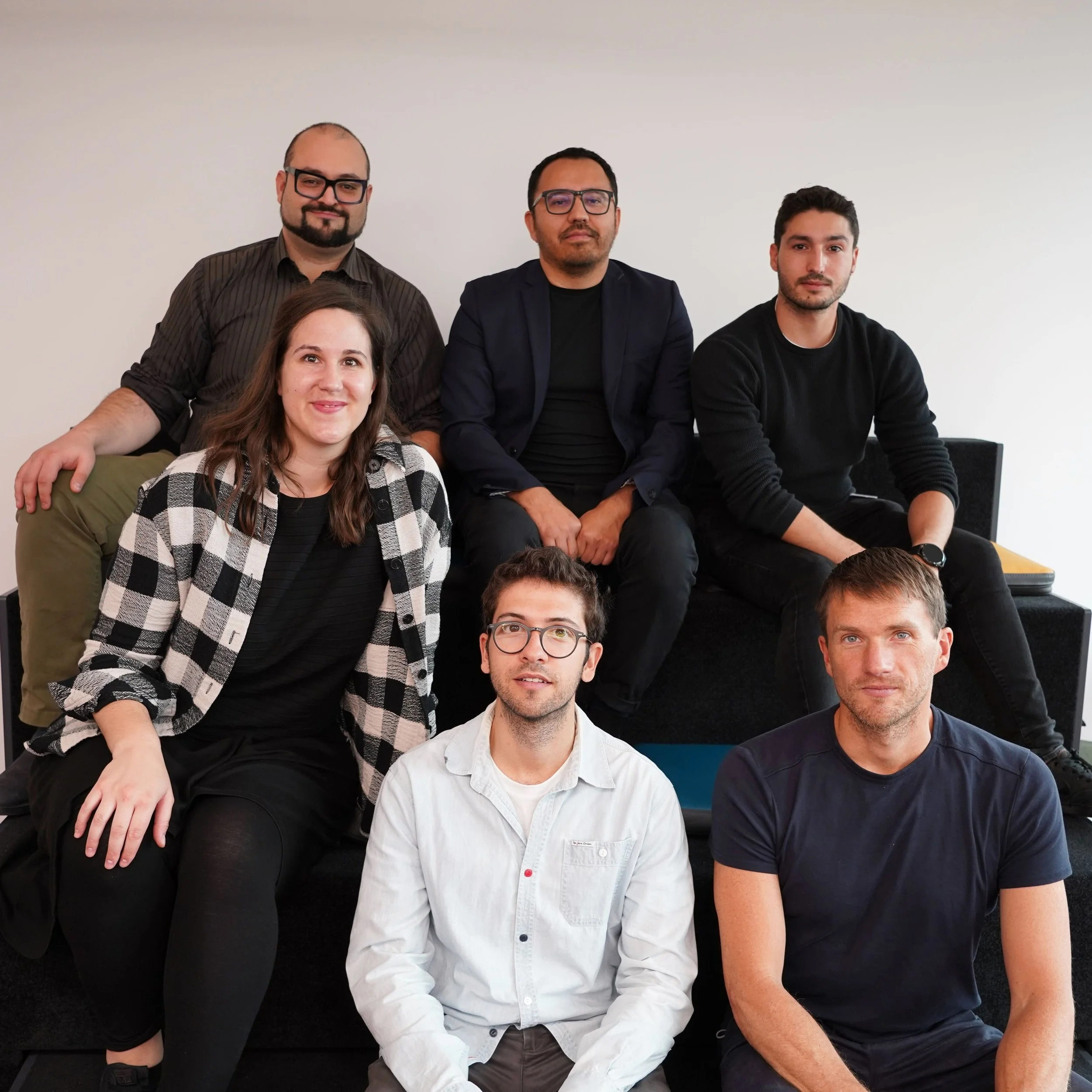
What made TechX different wasn’t the methodology or the brand. It was the people who chose to build something new inside an institution designed to resist change.
What Changed
Design practice inside a private bank doesn’t produce the kind of outcome you can point to on a dashboard. The change is slower and harder to measure — but it’s more durable.
By the time my engagement closed, TechX had a shared methodology, a distinct identity, and a research programme that gave decision-makers direct access to what their internal users actually needed. The CLM team had seen their feedback turned into actionable insights for the first time. And a unit that had previously struggled to articulate its value to the bank now had the language and the evidence to make its case.
That’s what embedded design does at its best: it makes the invisible legible.