Overview
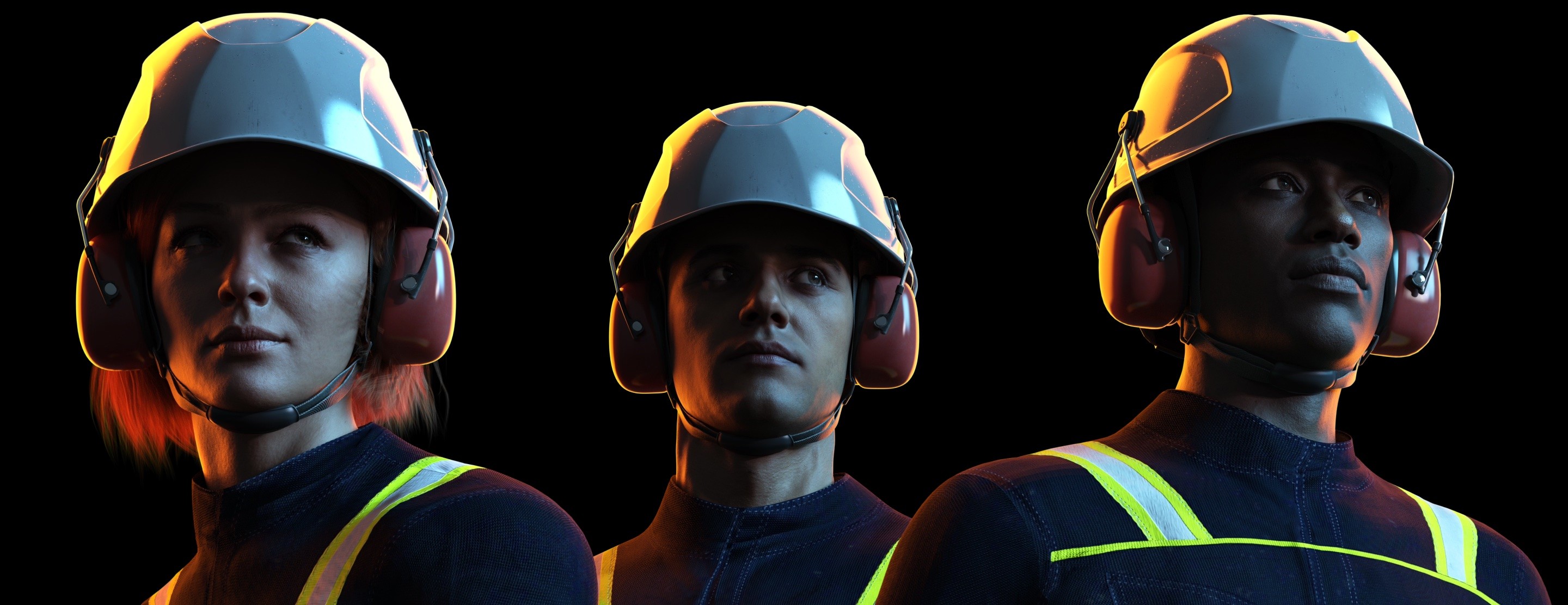
Pixaera is a VR-based health and safety training platform built for global enterprises operating in high-risk industries — oil & gas, construction, manufacturing, etc. The mission is simple and urgent: make safety training so good that workers actually retain it, and so accessible that no worker gets left behind because of hardware costs, language barriers or poor connectivity.
I joined as Lead Product Designer across a fully remote team, owning the end-to-end design of five major product initiatives that significantly expanded Pixaera’s product offering to align with client needs.
5
Major initiatives shipped
+50%
Desgin and dev speed
+300%
Reach expansion
Process
For each initiative I worked through a consistent six-step process — from defining the need to measuring impact in production.
1. understand client needs
- conversations with clients
- calls with customer success
- user feedback + in app surveys
- define desired outcomes
2. analyse competition
- who else is meeting the need?
- what do they do well?
- how can we do it better?
3. feature spec (Notion)
- develop the narrative
- use ai to create a spec doc
- refine and share internally
- resolve questions & comments
4. design (ChatGPT, Figma)
- map basic feature use cases
- consult with engineers
- use ai to inspire a UI
- create UI + prototype
5. feedback and revision
- run prototype w clients / users
- gather feedback
- revise designs
- revise feature spec
6. build, release, measure
- work closely with engineers
- check-in, demo often
- work closely with QA
- announce feature release
- track usage and feedback
The Problem with Safety Training
Traditional health and safety training is broken in predictable ways. It’s a PowerPoint delivered in a windowless room, a tick-box exercise workers forget the moment they leave. For global enterprises with workforces on various oil platforms, construction sites, or factory floors — many with limited connectivity and multiple languages — the problem compounds fast.
VR training was Pixaera’s original answer. Immersive, memorable, effective. But VR headsets are expensive, require bandwidth and a level of expertise to deploy that is not always available. The question wasn’t whether VR worked — it did. The question was: how do you reach the workers VR can’t?
01 — Scaling Beyond VR
The most consequential design challenge was also the most structural: how do you deliver Pixaera’s safety training to workers who can’t use VR?
I designed a video-based training format that preserved the quality and scenario-driven approach of the VR experience while removing the dependencey on specialised hardware. Workers could train on any device, online or offline, in their own language. The format was built from reusable modules — the same content architecture that powered VR could now power video with minimal extra content cost.
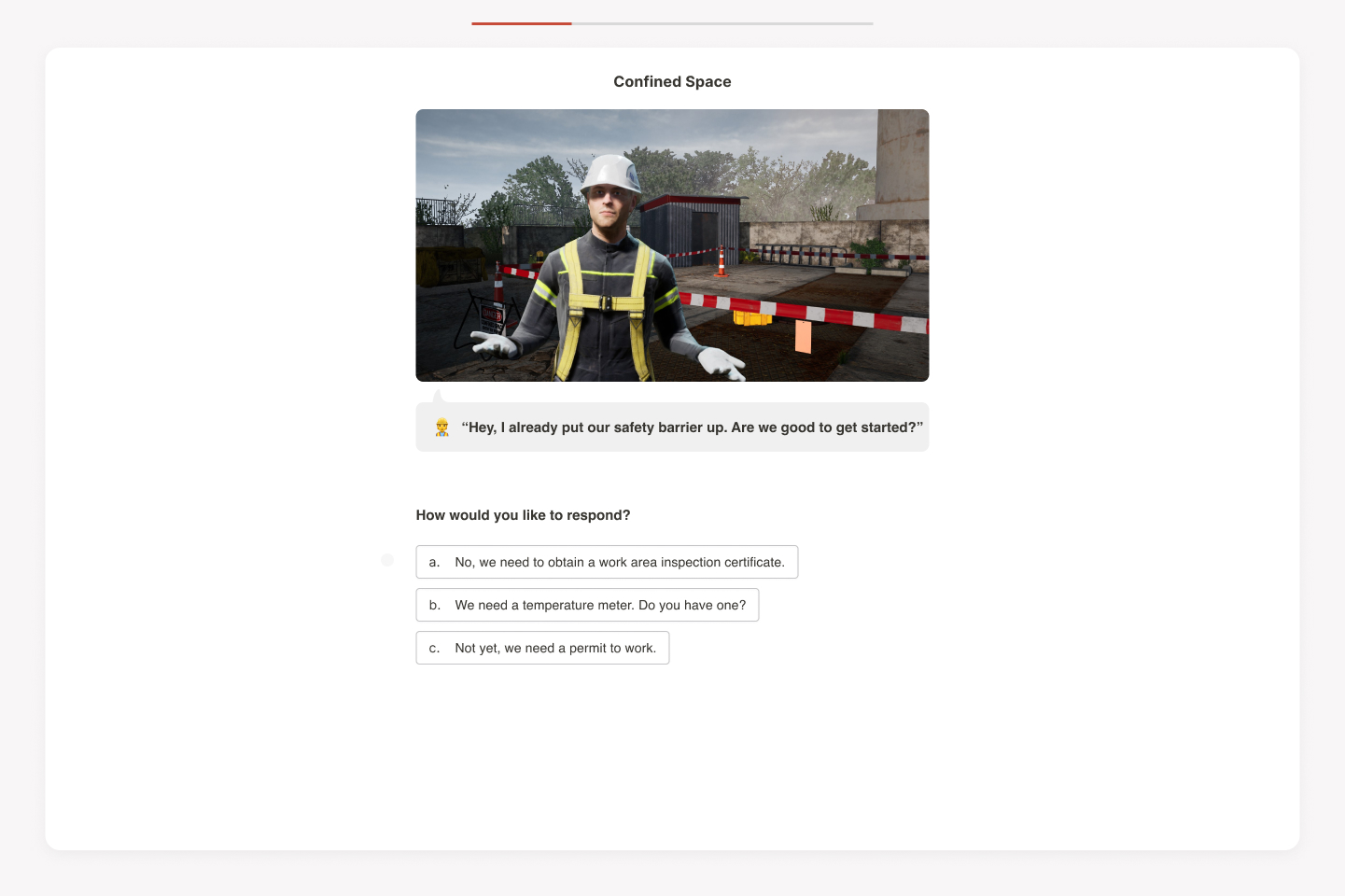
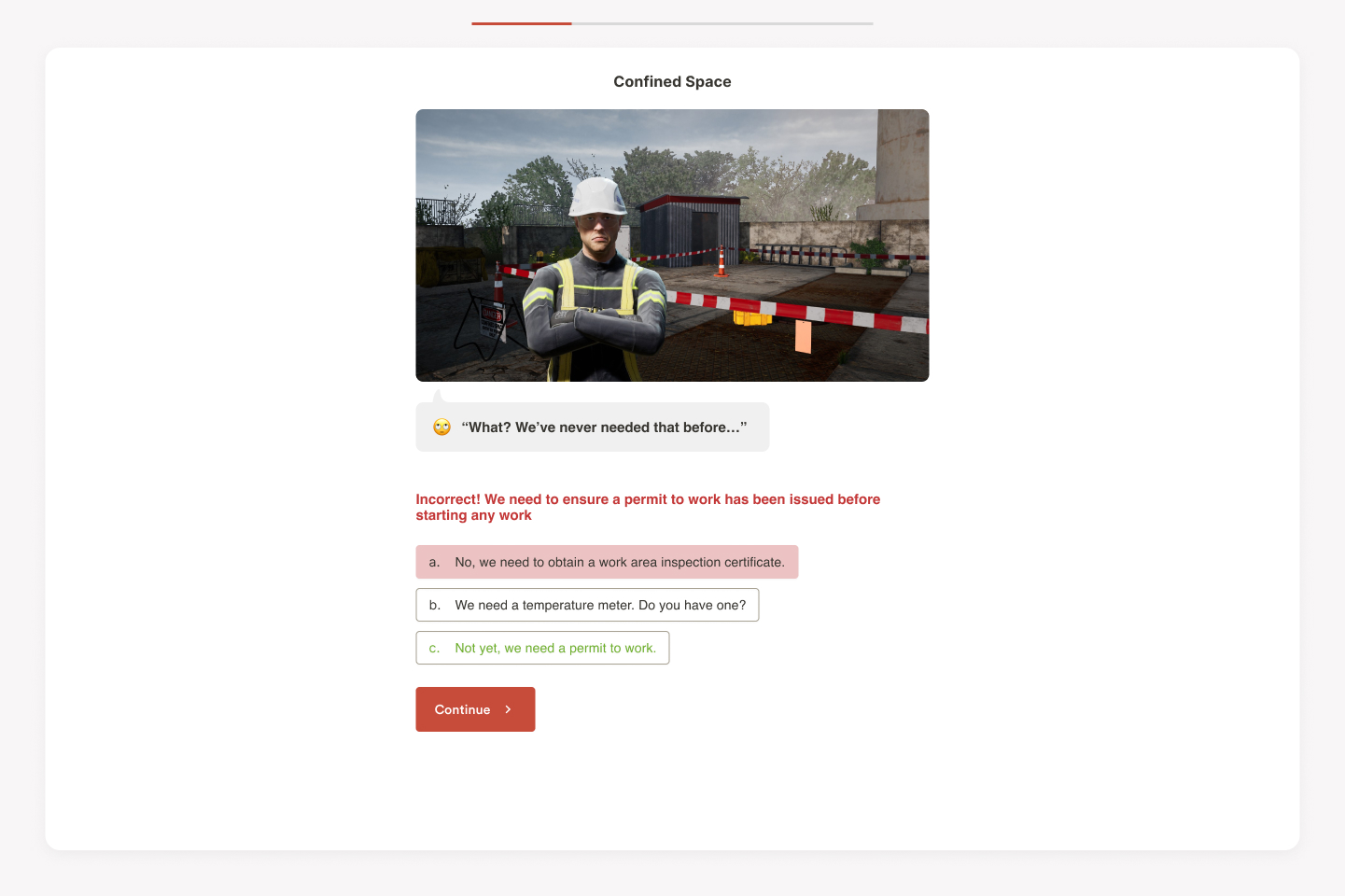
The result was a 300% expansion in the addressable workforce. A product that had been constrained by hardware became one that could reach anyone.
02 — Assessment Tool
User interviews told us that trainees often felt their time was wasted on modules they had taken many times before. But clients continued to spend the extra money just to tick the box. They needed a way to measure what workers actually knew — and to do it in a way that was highly unlikely to guess right.
I worked with our head of product to design a 10-minute knowledge assessment built around two ideas: scenario-based multiple choice / multiple answer questions grounded in real workplace situations, and confidence scoring that asked workers not just what they answered but how sure they were.
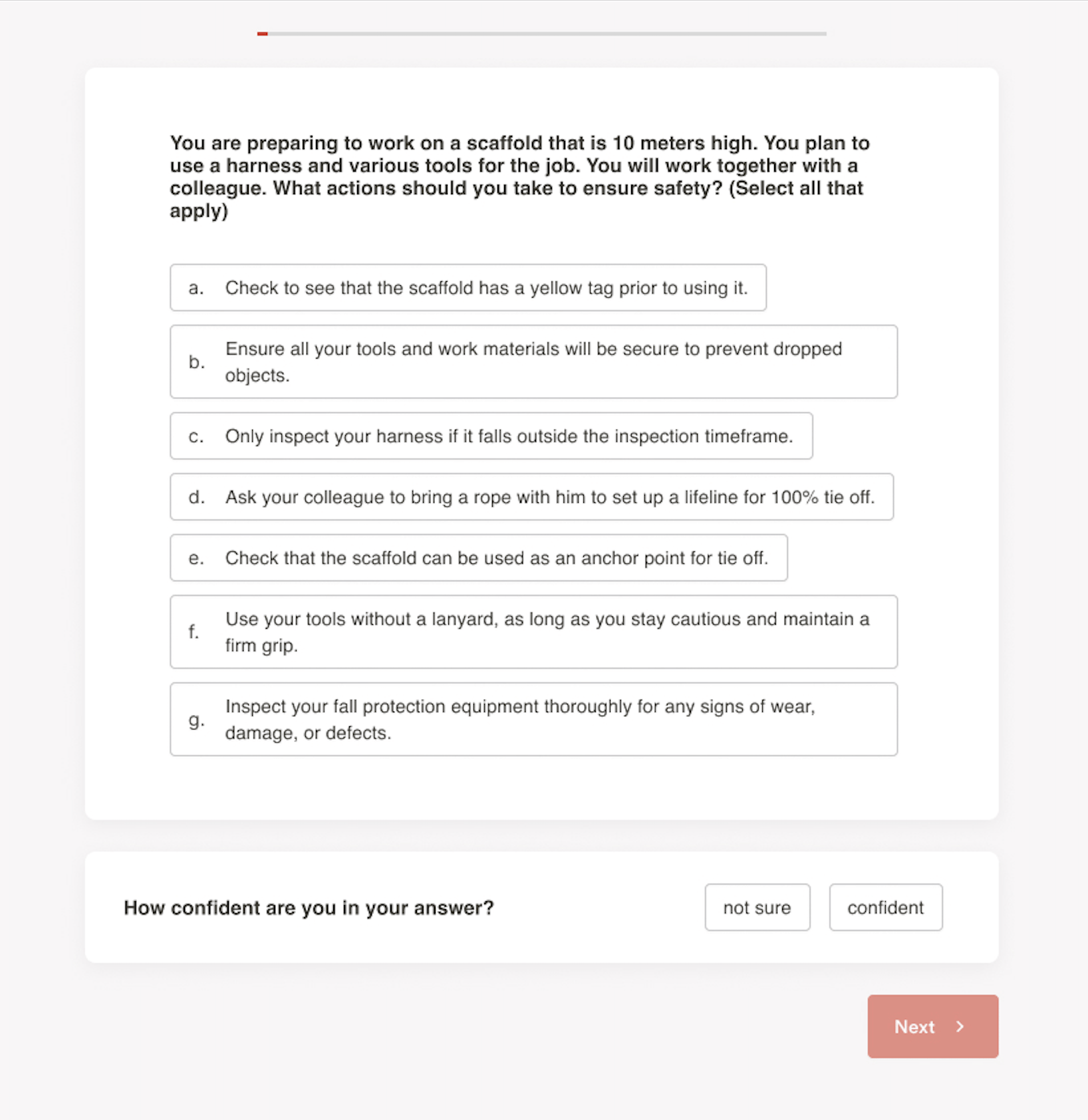
The confidence layer was the critical design decision. A worker who answers correctly but rates themselves “not sure” is a different risk profile from one who answers correctly and is confident. The data that came out of this distinction gave HSE managers something genuinely actionable.
03 — Training Passport
Workers move. They change employers, rotate between sites, work across contractors and clients. Every time they move, their training history doesn’t follow — so they repeat the same modules, burning time and budget that could go elsewhere.
The Training Passport solves this with a scannable credential: a QR code that carries a worker’s verified certification history across every employer and site they’ll ever work on.
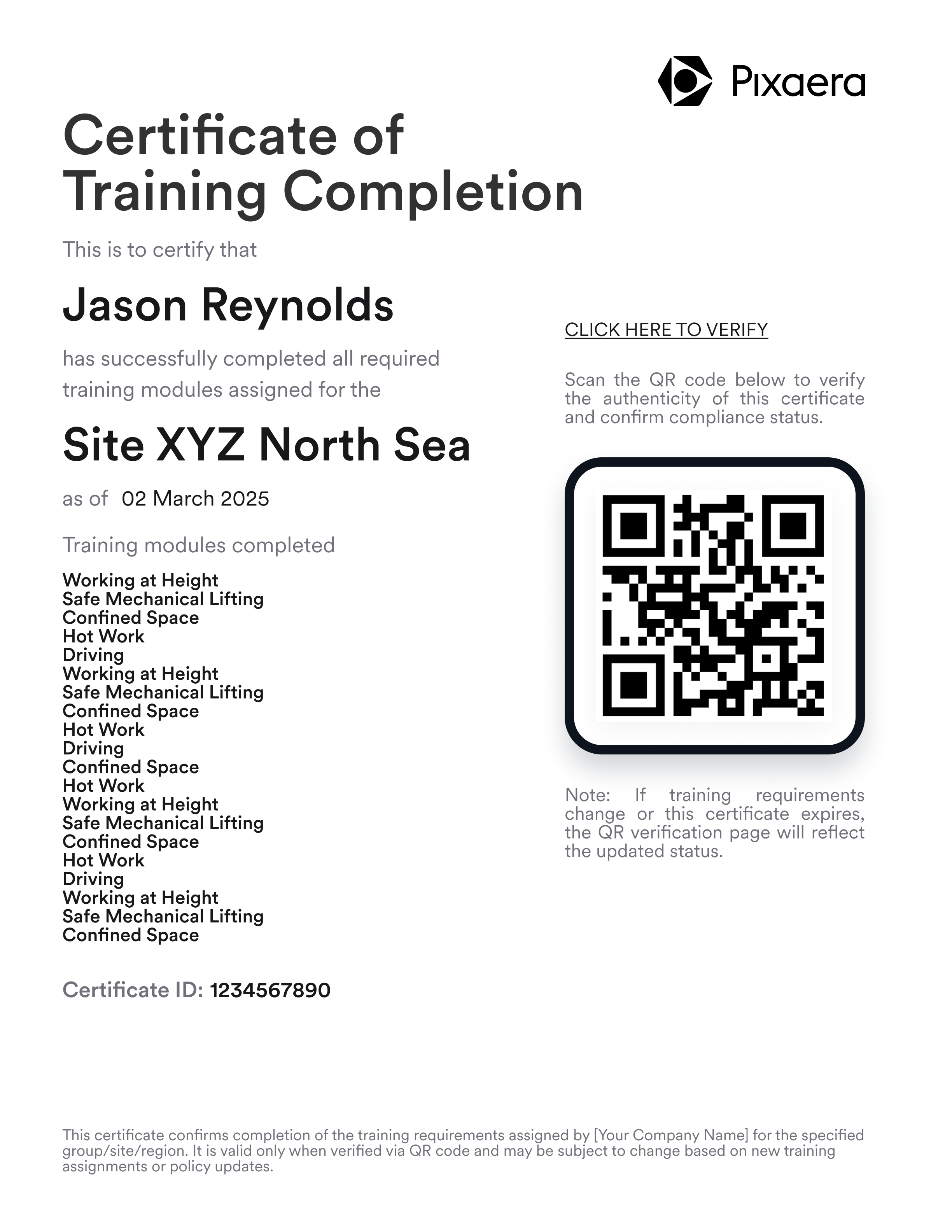
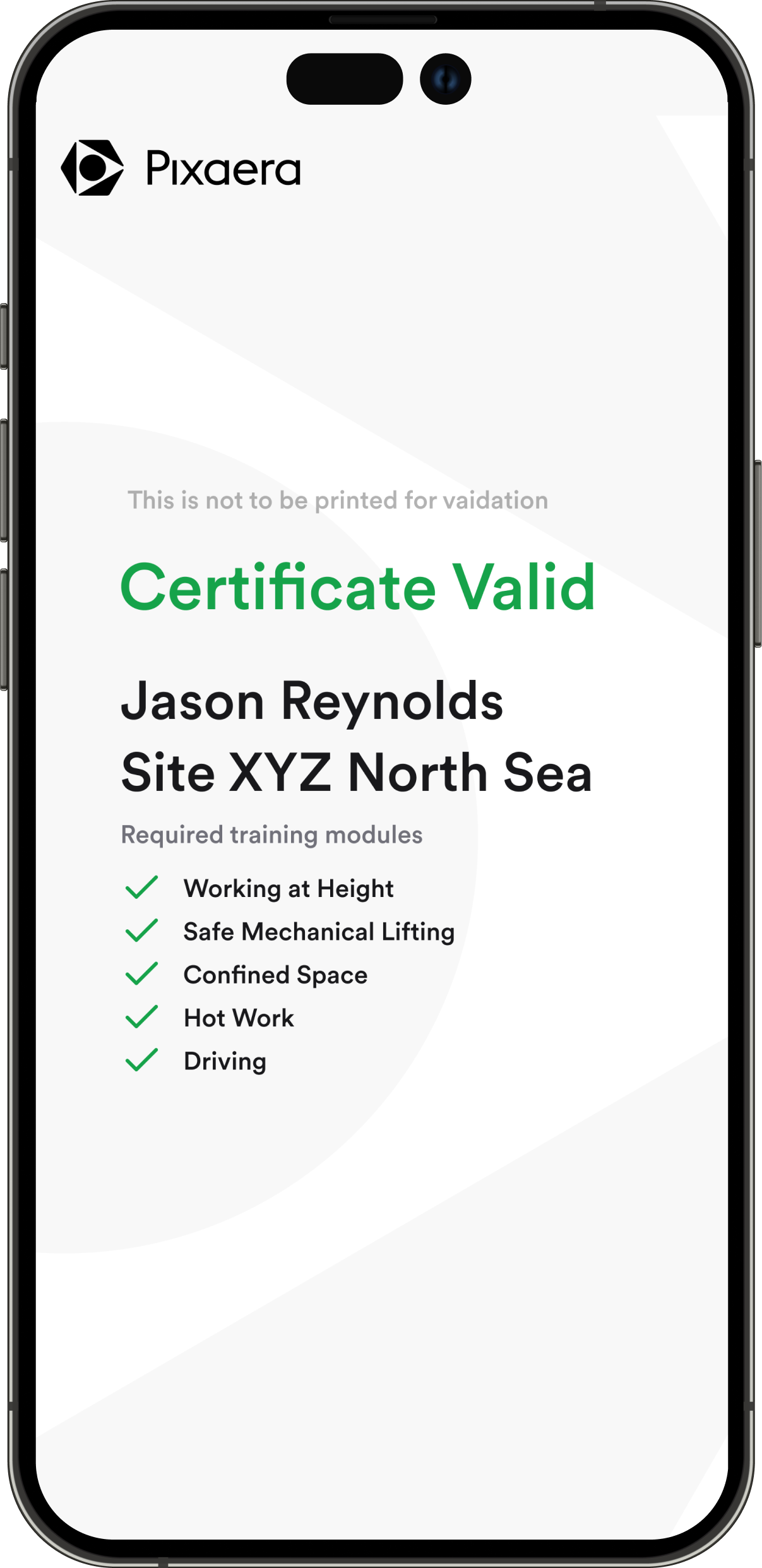
“A site manager scans the QR code. In under five seconds they know whether the worker in front of them is certified for the job. No paperwork. No phone calls. No questions asked.”
04 — Analytics Dashboard
Before designing anything, we needed to understand how HSE managers actually thought about safety data, reporting and training performance. I led six in-depth interviews and synthesised the findings into an affinity map that surfaced the real needs beneath the stated ones.
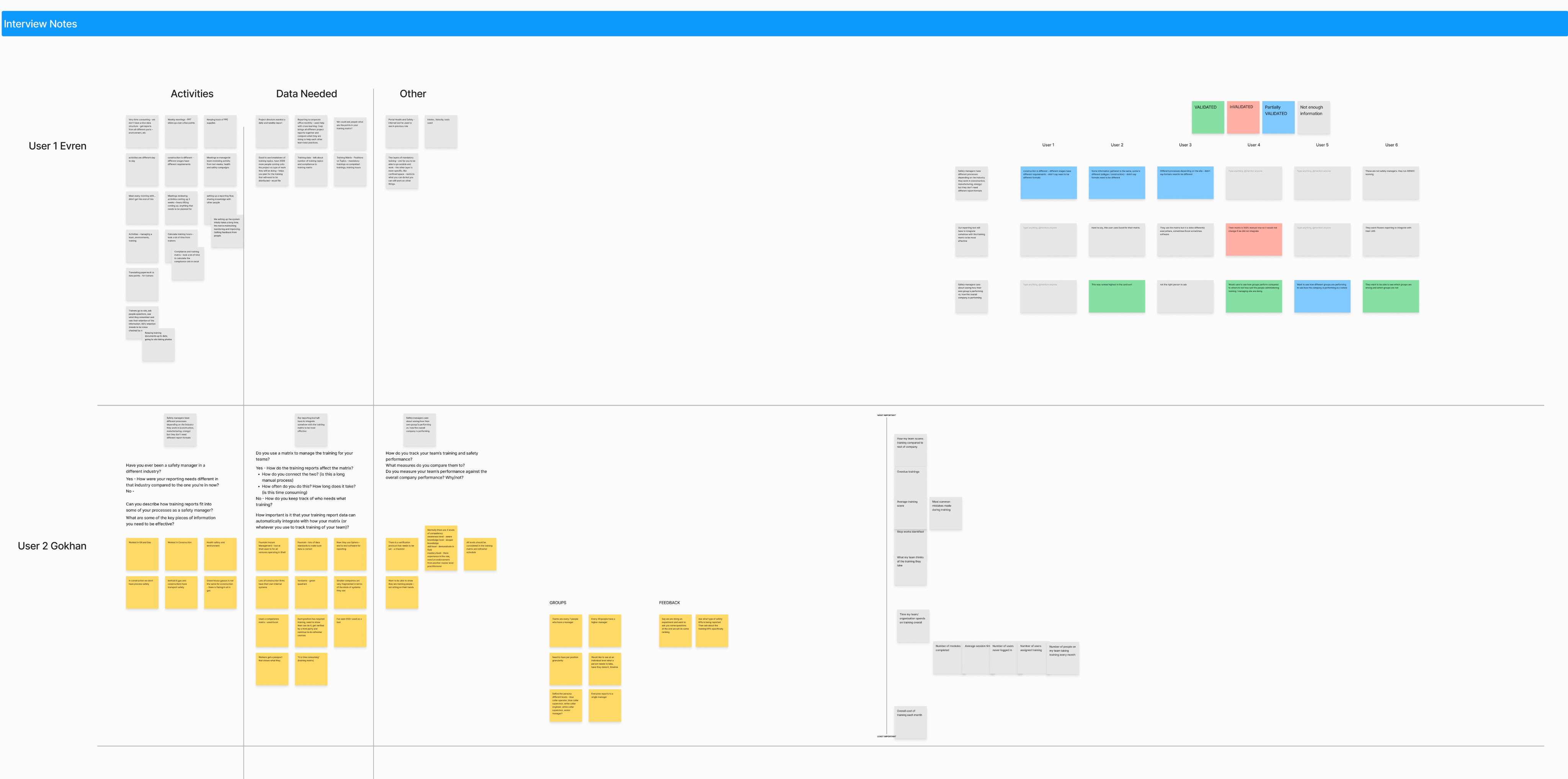
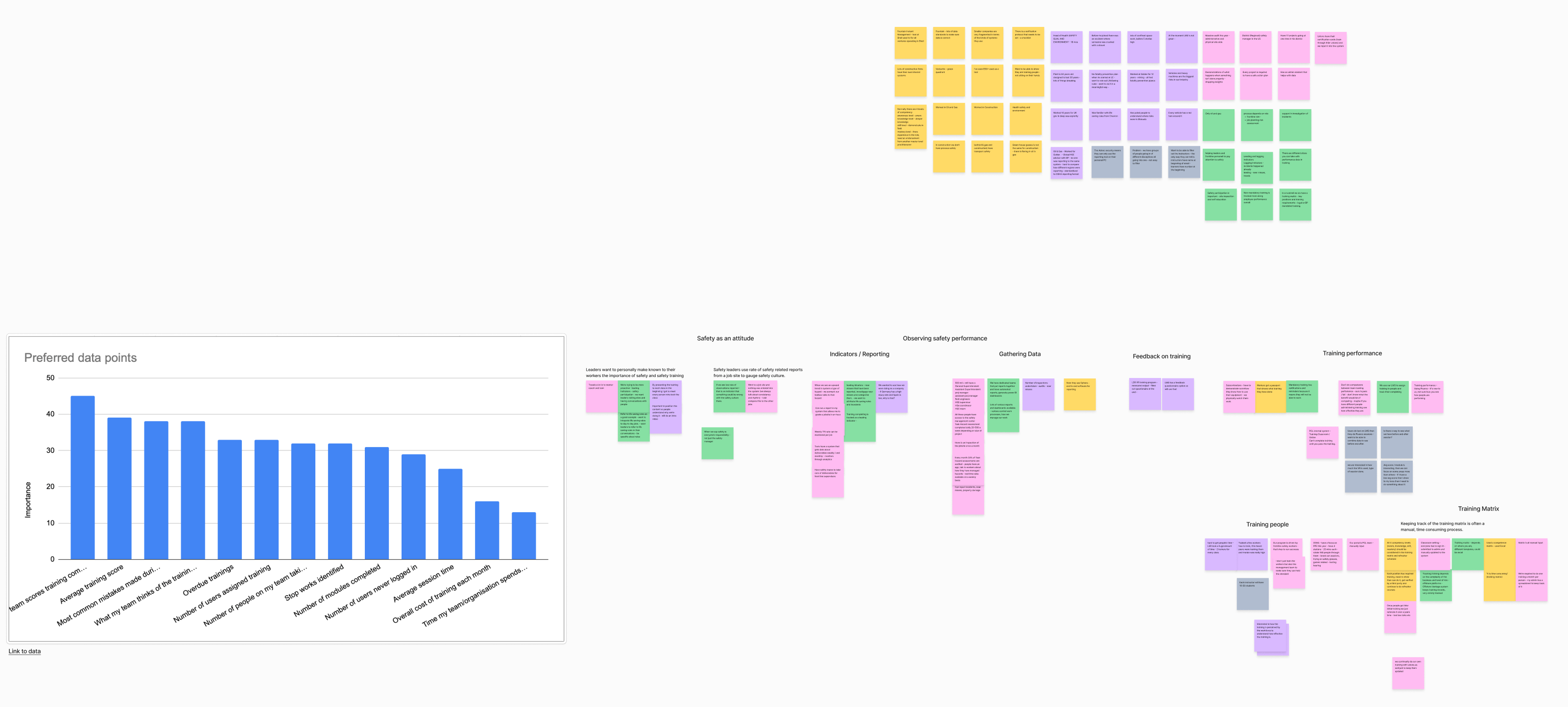
The key insight: managers didn’t just want to know if workers had completed training. They wanted to know if workers actually understood it — and where knowledge gaps clustered across teams, sites, and regions.
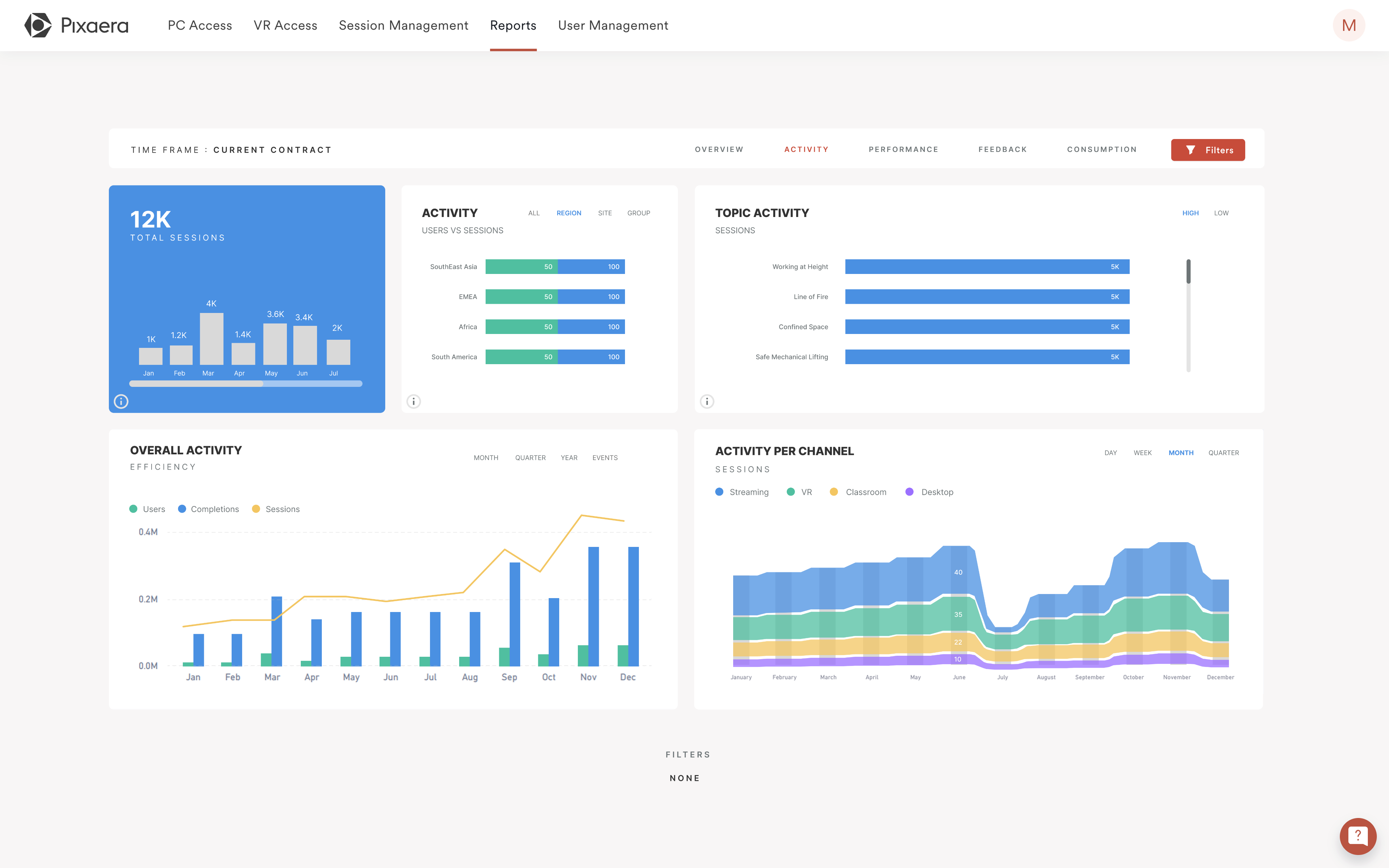
The research had made clear what HSE managers actually needed from reporting. I designed a dashboard across five dimensions — Overview, Activity, Performance, Feedback, and Consumption — with filtering by region, site, group, and time frame, so managers could drill into exactly the data that mattered to them.
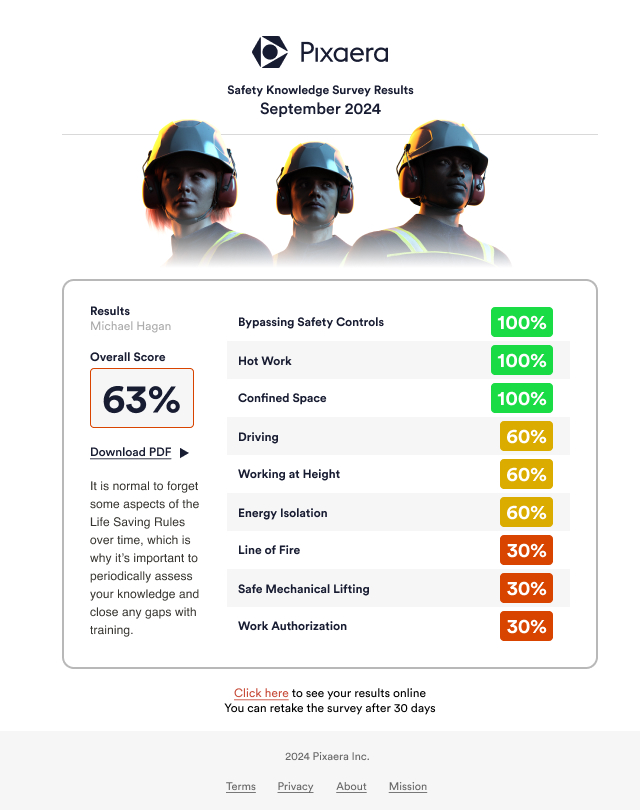
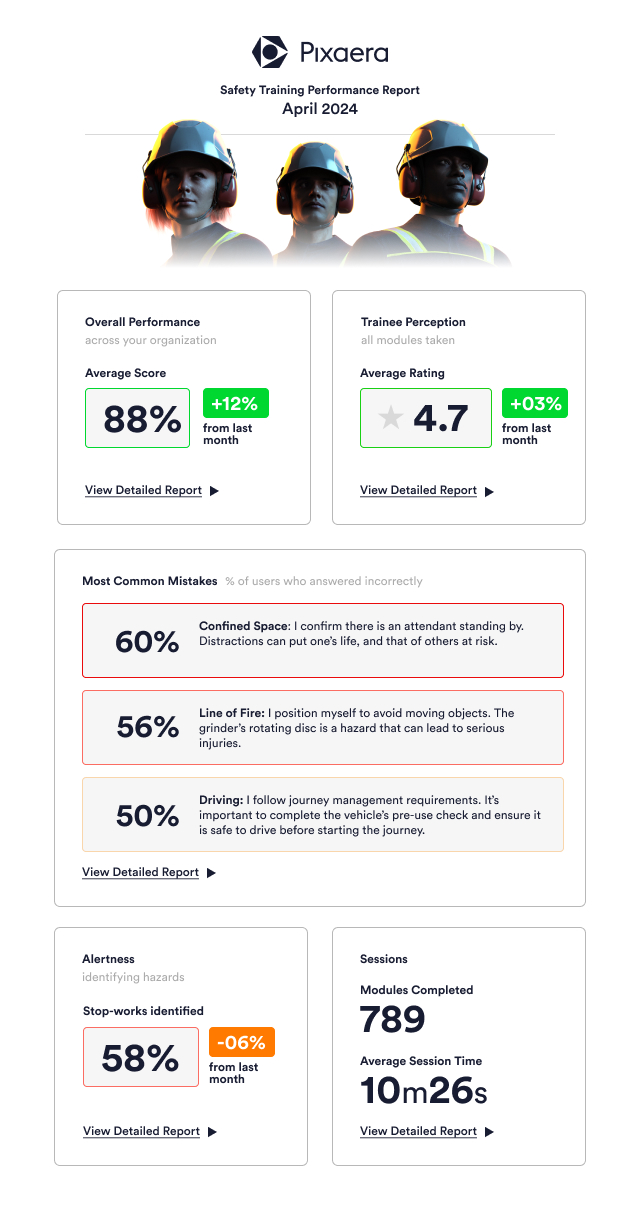
The report design extended into email — a digest that gave trainees and managers key numbers at a glance, without needing to log in, and linked through to the detailed view for anyone who wanted to go deeper.
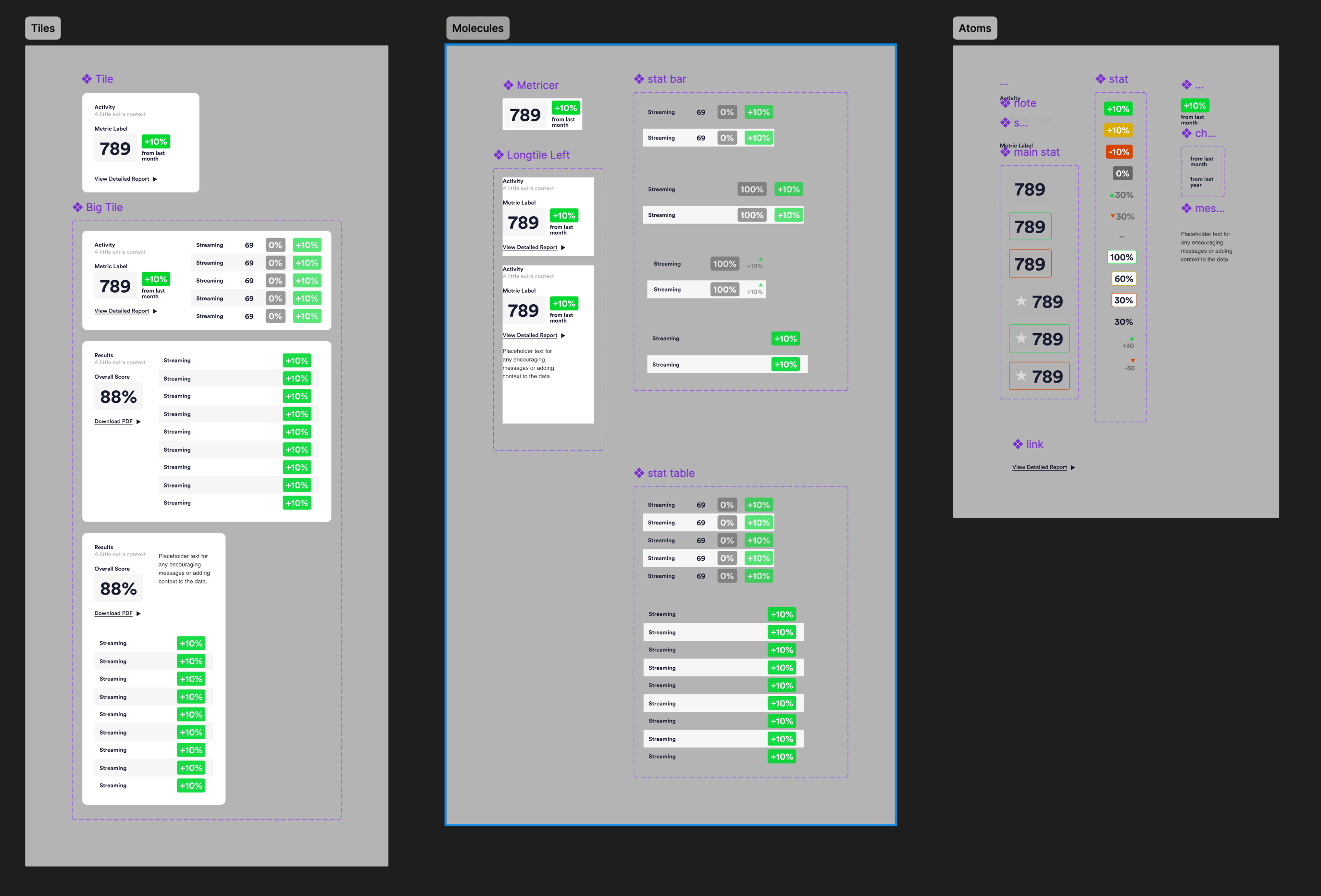
I created a set of components specific to these reports inspired by financial data that could clearly show not only performance at a glance but also progress.
05 — Admin Platform
Underpinning all four initiatives was a coherent admin platform — the Digital Twin — that let enterprise clients mirror their organisational structure, assign role-based training, and track compliance hierarchically across regions, sites and groups.
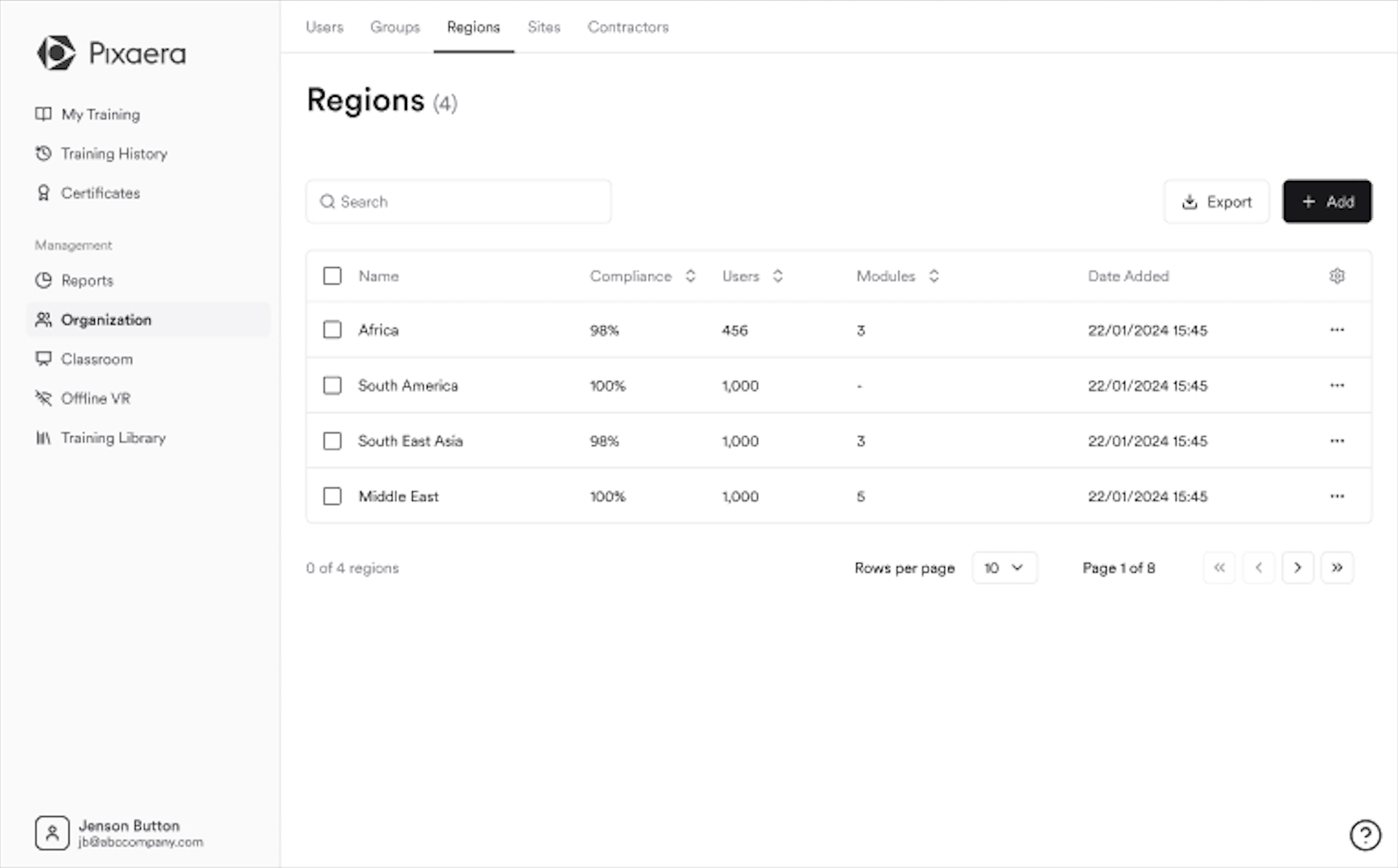
And to keep every screen consistent as the product grew, I progressively migrated the existing bespoke design system to a ShadCN based system that not only significantly reduced design and development times, but also improved application stability and performance.